May 2006 – Jenny doesn’t like me anymore
Posted by Barniferous in Friends and coworkers, Teaching English on December 9, 2016
I’m not exactly sure the date of this story, but it happened when I was a teacher at Numazu NOVA, so May seems like as good a place as any.
Jenny was a difficult person to get along with. She was one of those people who always had a chip on her shoulder both inside and outside the office. I had very few interactions with her in person, but I had heard a lot about her from other teachers.
According to the rumour mill, Jenny had been working at Fuji NOVA and was having trouble getting along with the supervisor. Before her annual performance review, she contacted the area manager claiming that the supervisor didn’t like her because of the colour of her skin. Since intensive HR training and conflict resolution are likely not mentioned at all during NOVA’s barebones manager training, Jenny was simply transferred to a nearby branch to solve the problem.
The other thing I had heard about Jenny was from her former roommate Angie, one of my good friends and someone I trust. Angie was a lot of fun to work with, to hang out with, and everybody liked her. Well, everyone except Jenny. Apparently they had some kind of roommate disagreement which resulted in Angie’s new computer being being damaged after liquid had been poured inside. Angie had no direct proof, but with Jenny being the only person with access and motive Angie was convinced that Jenny was responsible. She went to NOVA and demanded a new apartment because she didn’t feel safe living with Jenny anymore.
I had worked with Jenny a few times, and had attended Charlie’s farewell party with her last year. I was always a bit wary of her because of Angie’s experiences, but I tried my best to be professional and play nice at the office. Sharing a cramped teacher’s room with people you don’t get along with makes for a very long day at work.
On one particular day, a branch manager from a nearby school was visiting Numazu. Jenny was at Numazu on a shift swap. The two of them were talking in the teachers room between lessons. Teacher’s room conversation is usually open to anyone in the room, so after I had gotten ready for my next lesson I joined the conversation.
“Excuse me! EXCUSE ME! This is a conversation between A and B, so you can C your way out of it” yelled Jenny with an angry look on her face.
I was shocked by her rude response; it came completely out of nowhere – I had no indication that she had any problem with me before, and even later I still can’t think of anything I had done to provoke such a strong reaction. Usually I could let something like this go, but I think Jenny had caught me on a particularly stressful day with one too many kids classes. My response was quick and probably more harsh than it needed to be; I decided to borrow the words of Ricky from Trailer Park Boys. Yes, this Ricky:

I looked directly at her and asked “Hey Jenny, do you have any offs that need fucking?”. She responded “What?”. I answered “FUCK OFF”.
This immediately had two effects: the first was that all of the other teachers in the room said “WHOA” at the same time, likely because nobody had ever heard me talk to anyone else in that way before. The second effect was that Jenny never said another word to me again. Not during the day, not on the train, not at another branch, never. Jenny’s silence did not, however, have a negative effect on the rest of my time in Japan at all.
Standing up for yourself is important, although I probably could have handled the situation better. I’m not proud of jumping directly to Ricky quotes, but looking back on the situation I also don’t have any regrets.
April 30, 2006 – Ring shopping
Posted by Barniferous in The Penpal on December 1, 2016
Today both the Penpal and I had the day off, so we decided to go engagement ring shopping.
For those following the story, I proposed suddenly in February when the opportunity came up. Due to the sudden nature of the proposal, I didn’t have a ring. I had no experience buying any jewelry beyond bracelets and earrings before, so I was a bit concerned about picking out something myself. I was also worried about the language barrier on a major purchase. I talked about it with The Penpal and we decided to go shopping for the ring together. We discussed my budget in advance, and were prepared to buy if we found something good.
There are two jewelry stores in the Nakamise shopping area of Numazu. I went to one of them with my mom on her recent visit to Japan, so we decided to start with the other one. We were greeted by a smiling, friendly older man who led us to seats near a display case. As soon as we were seated, a young, well dressed woman brought us green tea. These are good examples of the little touches that Japanese stores use to make customers feel comfortable and important.
The smiling man asked some questions about what kind of ring we wanted (diamond engagement), what metal we wanted (thrash), and if we had any other requests on design or appearance (not particularly). Neither one of us are flashy people, we were looking for something simple that looked good on The Penpal’s slender piano player fingers.
We went through the process of looking at a few different rings and ended up narrowing the choices down to two: one with a slightly larger diamond, and one with a better quality diamond. We chose the slightly smaller one featuring a very high quality stone with a white gold band. It was beautiful!
At this point I had a small moment of panic because we hadn’t talked about price. After all of the discussion and choosing it would be really embarrassing if this ring was completely out of my price range. I got The Penpal to ask about the price. The friendly older man pulled out a list, looked down it, and then typed a number into a calculator for us to see. He then said “and a 10% discount” which brought the price just under the ceiling of my price range. I said we’d take it!
While the store worked on the bill of sale, I ran down the street to the same bank machine where late last year I had withdrawn over $2000 to pay for a plane ticket. I once again withdrew a huge wad of cash and returned to the store to finish the transaction.
Since I had proposed in February we had discussed our engagement with family and friends. Getting a ring somehow made everything seem more real. As we walked out of the store smiling and admiring the ring, I realized that this was the first major purchase of my life that I didn’t have a single regret about. Not a one.
2016 Update – Still no regrets 🙂
Memorable students – The Twins
Posted by Barniferous in Teaching English on November 25, 2016
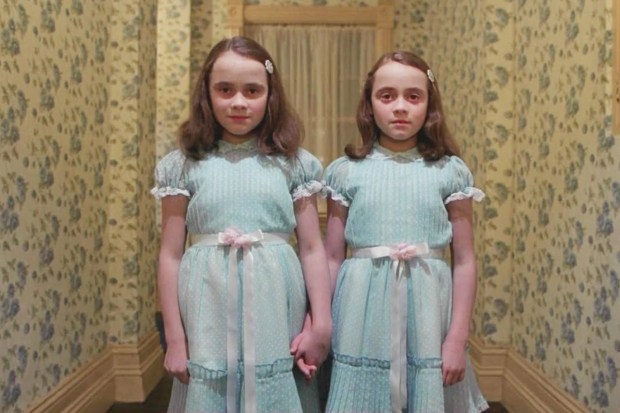
During my time at Mishima NOVA, I got to teach some really memorable students. This is about The Twins, who usually came for lessons on one of my days off.
Many students come for lessons on the same days every week. My usual days off were Sunday and Monday, so I rarely got to teach students who would only come on those days. One particular Monday I was working on a shift swap, and noticed that I had a lesson with two students with the name family name. When I asked about it, the other teachers told me that I had to teach “The Twins”.
The Twins are identical 14 year old twin girls who, like many of the younger students, were only taking English lessons because their parents forced them. They were notoriously difficult to teach, with my supervisor warning me that it wasn’t uncommon for them to both stop talking a few minutes into the lesson, turning the remainder of the 40 minutes into an uncomfortable staring contest. To make matters more challenging, they were both in the second lowest level and had been for some time.
If I had been a less experienced teacher I probably would have entered the classroom with an impending feeling of dread. In this case I decided to challenge myself; I was going to see if I could get The Twins to talk.
I walked into the lesson, put my student files down on the table, and introduced myself with a big friendly smile. I asked Twin 1 her name and she responded. I asked Twin 2 her name and she responded as well. I told them I was from Canada and I lived in Numazu (modeling the response I wanted from The Twins). I asked Twin 1 where she lived, and she said Mishima. I then asked Twin 2, who naturally also answered Mishima. I pretended to be surprised that they both lived in the same city.
I then told The Twins that I was an English Teacher and asked what they did. This time I started with Twin 2 who said she was a junior high school student. Twin 1 gave the same answer. I faked surprise again. My fake surprise increased when they told me that they went to the same school. I kept doing this for a few more minutes until Twin 2, who wasn’t sure if I was actually clueless, pointed at Twin 1 and said “she is my sister”.
Score one for the teacher! I just got unprompted dialogue in English from one of the school’s most difficult students!
I don’t think they really knew what was going on, but they did keep talking and I managed to get a decent lesson out of both of them. I proudly returned to the teachers room to describe my accomplishment.
In case you’re wondering, acting clueless was not something that I learned in my 3 days of on the job training when I became an English teacher; that was all me 🙂
(Author’s note) I did get a few more successful lessons with the twins after this, with only brief staring contests.
April 22, 2006 – Zenbu wakatta yo
Posted by Barniferous in Teaching English on October 25, 2016
The month of April has been a busy one for group kids classes. After two and a half years as an English teacher in Japan I would consider myself to be a “good” or “very good” teacher for adults. I enjoy most of my lessons and feel like the students are both enjoying themselves and learning something.
I can’t say the same things about my kids classes; they are the hardest and least enjoyable part of my job.
Today in one of my group kids classes, I had a young girl who decided it would be fun to throw a marker at my face. I wish I could say that I made a matrix-like dodge, impressing the class into respecting my teaching authority. Instead they laughed as the marker bounced off my face while making a smacking sound.
The same little girl decided to up her game later in the class (after I had hidden the markers) by calling me a bunch of nasty words in Japanese. One of the big selling features of NOVA is that the classroom environment is supposed to be English immersion. Even if teachers can understand Japanese, we are supposed to use English at all times. However, after about a full minute of her using every awful word she knew I was getting tired of the abuse. I smiled, leaned in, and told her quietly but firmly “zenbu wakatta yo” (I understand everything). She was shocked, turned red, and immediately stopped the name calling.
English immersion or not, everyone living in a foreign country should make efforts to learn the local language. It might come in handy one day!
Author’s note: I recognized most of the names she was calling me because the “bad” words in a new language seem to be the most fun to learn. This backfired on me a few years earlier which you can read here.
April 21, 2006 – Good day
Posted by Barniferous in Teaching English on October 23, 2016
Today was a rare easy day at work – light schedules for all teachers and fun lessons. This is a nice surprise in an otherwise overloaded and challenging month at Numazu NOVA. I wish every day could be like this!
April 20, 2006 – Trailer Park Boys
Posted by Barniferous in Azeroth, Friends and coworkers, Life in Japan on October 22, 2016
I am proud to say that I have hooked an Australian and an American on a Canadian TV show that we all watched while living in Japan.
Trailer Park Boys is just that funny!
April 2006 – Don’t start a fight with someone twice your size
Posted by Barniferous in Teaching English on October 21, 2016
This is a post that didn’t originally appear on my blog in 2006, but it was a memorable experience so I thought I would share.
At Numazu NOVA, I had several group kids classes. One of my classes was the senior group – ages 9-12. Like other NOVA kids classes, the students were grouped by age and not ability. This left me with a class featuring several average students, one really bright and outgoing student, and one student who had a harder time with English than the other kids. For the sake of storytelling, let’s call the slower student Gian and the bright student Nobita. The Doraemon reference is fitting – Gian was about twice the size of the shorter, slimmer Nobita.
Nobita usually gave Gian a hard time, but on one day in particular he was especially rude; mocking Gian for reading slowly, for making mistakes speaking, and generally anything else he tried to do in English. Gian was honestly trying is best; he just wasn’t picking up English as quickly as the other students and Nobita wouldn’t let him forget it. I don’t usually have this kind of problem in other classes, so I wasn’t really sure the best way to deal with it. I tried my best to discourage Nobita from being a jerk, but he was enjoying the reaction that he was getting from his classmates too much.
Near the end of the class, Nobita took things a bit too far, deciding to move from verbally making fun of Gian to actually poking him in the chest.
That was a mistake.
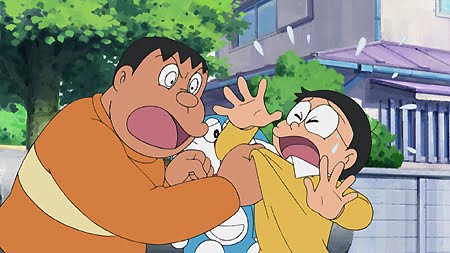
If you have never seen judo before, it is surprising how quickly one human being can launch another through the air. Within milliseconds of Nobita’s poke, Gian had executed an effortless throw, launching Nobita gracefully through the air. Although Nobita’s takeoff was smooth, the landing was not; he came down on the top of his head and crumpled in a heap on the floor. I don’t at all condone real life violence, especially in the classroom, but this was incredibly impressive to watch up close!
Nobita looked up at me from the floor and make the universal shrugging gesture for “are you going to do anything”. I told him in English “you shouldn’t poke him, he’s way bigger than you! Don’t do it again”. I think he got the message, and he toned down his abuse of Gian afterwards.
I’m about 170cm (5 foot 7 for my non metric friends) and I was always the small kid in school. At a young age I learned that starting a fight with someone twice my size was never a good idea. I’m not sure how much English Nobita learned in my English class, but I hope he will at least remember the lesson he learned by trying to physically bully someone twice his size.
April 2006 – The perils of not wearing a watch
Posted by Barniferous in Teaching English on October 10, 2016
As a conversational English teacher, one of the most important things I brought into the classroom was my watch. It allowed me to pace my lesson properly and make sure that I had enough time to get ready for my next lesson.
Lessons at NOVA are 40 minutes long. In that time the teacher needs to cover:
- Student intros
- Warm up exercise
- Intro to the lesson
- Introduce new language
- Drills / language practice
- Activity (situation / role play)
- Feedback and wrap up
After lessons teachers have 10 minutes to fill out the student evaluations, put away the files or hand them off to the next teacher, then get files for the next lesson. This time is also used to check for schedule changes or take bathroom breaks. There is a bell that rings to signal the start and end of the class time, but depending on the branch and the students it may be difficult to hear.
At Numazu NOVA, it’s nearly impossible to hear the end of class bell from the kids classrooms. The kids rooms also have no visibility to the other classrooms, so you can’t see when the other teachers are going back to the teacher’s room at the end of the lesson. This caused problems for a few people in my time as a teacher, but the funniest example happened to my friend Super Dave.
One day I was in the teachers room between lessons and noticed that Super Dave had not yet returned from his kids class. As the time ticked on we started to wonder if he had missed the bell, or if the classroom required extra cleanup. After a few more minutes I decided to go check on him.
The door to the kids classroom has a window; I looked through and saw him still teaching the class, completely oblivious to the time. I knocked on the glass to get his attention and pointed at my watch. He came over and saw that he was now 7 minutes over and only had 3 minutes until his next class. This prompted him to do what many of us would do:
He yelled “OH SHIT” very loudly.
In the middle of a kids class.
Super Dave immediately covered his mouth, just like a scene from a cartoon. I felt bad for him, but couldn’t help laughing at the situation. He rushed the kids out of the class and flew down the stairs to the teachers room where his wonderful coworkers had his next lesson material ready to go with about a minute to spare.
There are two important things to learn from this story: the first is to always wear a watch when teaching conversational English. The second is that if you say a bad word in a kids class, it’s guaranteed to be the one English word that the kids will remember.
April 2006 – The benefits of drinking with students
Posted by Barniferous in Teaching English on October 6, 2016
This is a post that did not originally appear on my blog in 2006. NOVA had a strict policy against teachers interacting with students outside of the classroom, so posting this at the time would have been a very bad idea.
NOVA kids was one of my least favourite parts of being a conversational English teacher. NOVA organizes their classes by age group – Kinder is 3-6 years old, Junior is 6-9 years old, and Senior is 9-12 years old. The makeup of a class is determined by demand and availability, which occasionally leads to situations like I had in one of my Kinder groups – a very bright 6 year old in with a bunch of 3 and 4 year olds.
The 6 year old girl, lets call her Momoko, couldn’t move up to the Junior group until the next time the classes were reassigned. The work that she was doing was too easy for her, and she was obviously not enjoying her 40 minutes of English lessons with a bunch of younger kids. She decided to enjoy her class time by getting the other kids to do things like hiding my teaching material, playing with the light switch, throwing around anything that wasn’t bolted to the floor, and generally making my class difficult. She didn’t do any of these things herself, she just influenced the other kids and enjoyed the chaos. I did sympathize with Momoko being stuck in a classroom full of little kids, but as a teacher I was very frustrated.
Momoko was usually picked up by her mother, but on one particular Saturday her father showed up instead. The father (let’s call him Takuya) was a high level student at Mishima NOVA, and was one of the people who would often go out for drinks and karaoke with other teachers. I’ve had a few very fun late nights out with Takuya and others, but I had been unaware that he was Momoko’s father.
Takuya greeted me in English and asked how Momoko was doing in the class. Employing the tried and tested “sandwich method”, I told him that Momoko was the strongest student in the class, she was often causing problems because the work was too easy for her, and I thought she was ready to move up to the next age group. I gave a few examples of Momoko’s behaviour, watching her curious reaction as she saw the teacher and her father speaking English in front of her. This was obviously something she had never considered before.
Takuya had never heard this kind of feedback about his daughter before. He thanked me for sharing, kneeled down to her height, then proceeded to talk to her very sternly in Japanese for a few minutes. She went pale and looked like she wanted to crawl under a rock. At the end he told me in English that Momoko’s behaviour would improve.
The next time I saw Momoko, she had turned from a troublemaker into a model student! My Kinder class suddenly became a lot easier and more productive. A few weeks later when the classes were reassigned, she joined by Junior class and continued to be the best behaved student in the class.
NOVA’s policy prohibiting teachers from associating with students outside the classroom makes sense; they want to avoid any situations that could cause lawsuits, damage to the school’s reputation, and especially loss of repeat business. Companies needs to take measures to protect their business, but at the same time, allowing sensible interaction between teachers and students or teachers and parents can be a huge benefit.
In this case, my relationship with Momoko’s father was a big help in improving the classroom situation for both Momoko and the other kids in the class. Could this have been achieved without hours of izakaya time and karaoke? Probably, but my way was a lot more fun!
 Drinking in Japan
Recent Comments