Archive for 2015
June 2, 2005 – Who quits by fax?
Posted by Barniferous in Friends and coworkers, Teaching English on June 2, 2015
Today started out as a typical Thursday at Mishima NOVA. Students showed up, teachers taught English, all was normal. In the evening I had an empty lesson and was catching up on some paperwork in the teachers room. I went out front to make a copy, when Patrick the manager started to read an incoming fax.
Patrick read the fax, paused, read it again, and then said “Rumi, please remove Kasparov from the schedule. He doesn’t work here anymore”. Rumi was confused, and not sure if she understood the request. Patrick repeated “Kasparov just quit and doesn’t work here anymore. Please remove him from the schedule”.
It was no secret that Kasparov was not happy working as an English teacher for NOVA. A lot of people sign up to teach English in order to move to Japan, but then realize that the actual teaching is not the fulfilling career choice they thought it would be. Turnover for English teachers is fairly high, but most of the teachers who leave give 2-4 weeks of notice.
Kasparov was an accomplished coder, having developed software as a hobby. His Japanese was also quite good. Unbeknownst to everyone, he had been searching for a new job and had just been hired to do custom coding for a small business in Gotemba. However, in order to get the job, he needed to change the category on his working visa.
Kasparov’s fax explained that as of this morning, he had completed the change to his working visa, and he was no longer legally allowed to work at NOVA. Instead of giving any warning or indication that something was going to happen, he sent a fax on his day off and just never came back. It was one of the biggest dick moves I have ever seen.
Saturday and Sunday are the busiest days of the week at NOVA. Removing one teacher from the schedule created a panic for the staff, who had to try to juggle lessons and find a quick replacement teacher (in an area short of teachers) before finally cancelling lessons and calling students to apologize.
Kasparov quit by fax in order to stick it to NOVA. Overall, the effect on the company was very small, unlike the effect his sudden departure had on his former coworkers and students. He was not exactly popular before he pulled this stunt, and he definitely wasn’t going to win any popularity contests afterwards.
If you have a grudge with your employer, don’t quit in a way that screws over your former coworkers or the customers. That’s just being an asshole.
(2015 Update) My original post on the subject was 2 sentences long with no details because I wasn’t sure who was reading my blog. I should have posted it anyways – it’s not like anyone other than Kasparov would have disagreed with me.
June 1, 2005 – Breaking up fights
Posted by Barniferous in Teaching English on June 1, 2015
There is a shortage of teachers in the area now, so today I had to teach a group kids class that I had never taught before. It was a Junior group, which had kids aged 6-9.
The class started like any other kids class, but I quickly realized that two of the students didn’t like each other. Let’s call them students A and B. It’s not uncommon to have some students (especially boys) teasing each other or poking at each other, but this is the first time I have ever had a student seriously attack another student before.
I don’t know exactly what set things off, but for some reason student A lunged at student B and started laying the smack down. I pulled student A off and tried to get him to calm down. Student B took this as an opportunity to verbally taunt student A, which just made things worse. A kept trying to escape my grip and get at B again. I was unable to get A to calm down, so I picked him up and removed him from the classroom. He kept trying to get around me and back into the room to keep fighting, so I called the Japanese staff for help. Even with the staff’s help, student A kept trying to get back into the classroom to attack student B again. They ended up keeping him outside the room for several minutes while I returned to my class, and then sat next to him for the rest of the lesson to keep him away from student B.
It goes without saying that this was not my most productive NOVA kids class. I had to write up the entire incident in the kids logbook. Every branch has a book to write about any incidents in kids classes, including fights or injuries. The kids logbook was a great way for teachers to vent, but I am not sure it was actually used by any of the staff for anything else.
If anything, I did manage to keep anyone (including myself) from getting hurt. Breaking up fights between children was definitely NOT in the promotional material for teaching English in Japan!
Trailer Park Boys: Cultural ambassadors
Posted by Barniferous in Life in Japan on May 30, 2015

Ricky, Bubbles and Julian: The Trailer Park Boys
(This post was an unposted blog entry from May 2005, during my second year of teaching English in Japan)
In an effort to save money, I am trying to spend some more time at the apartment hanging out with my roommates. We have a TV in the apartment, but Japanese TV is very hit and miss. There are some shows you can enjoy with limited language ability, but a lot of what’s available is not all that interesting when you can’t understand.
My roommates Azeroth, Palmer, and I took turns trying to locate some good, non Japanese shows we can all watch together while hanging out. I am proud to report that I introduced them to a fantastic Canadian show that is a great cultural ambassador for the country. A show that never fails to entertain or educate. A show that is as Canadian as hockey, maple syrup, and complaining about Celine Dion.
That show is Trailer Park Boys.
For those who have not had the pleasure of watching this show, it is a mockumentary about the residents Sunnyvale, a fictional trailer park in Nova Scotia, Canada. The main characters are serial criminals Ricky and Julian, and their best friend Bubbles. Most of the stories involve Ricky and Julian coming up with illegal schemes to make a lot of money and then retire. The end result is usually a return to jail at the end of the season after some drug and alcohol fueled mayhem.
The rest of the cast of characters is extremely colourful: Trailer Park supervisor Jim Lahey is a former cop and raging alcoholic, his assistant Randy never wears shirts, local wannabe gangster and very white rapper J-Roc asks “know what I’m sayin” about 30 times a sentence, and idiot henchmen Corey and Trevor can’t get anything right.
The show is absolutely filled with drinking, pot smoking, constant swearing, and occasional gunplay. It’s low brow, but it’s HILARIOUS. I would say it’s the funniest Canadian show not called “Kids in the Hall”.
So how are Trailer Park Boys cultural ambassadors? Despite being foul mouthed criminals, the boys care deeply about their friends and family. At one point Ricky publicly humiliates himself to ensure that his daughter gets a set of encyclopedias. In addition, the characters are all fiercely proud Canadians, and the show is ahead of it’s time with the acceptance of gay and lesbian characters; when Jim Lahey and Randy come out, nobody cares as long as they can keep playing street hockey.
Trailer Park Boys is definitely not a show for everyone, but Azeroth and Palmer absolutely love it. After a long day of teaching conversational English while wearing ties, there is nothing better than sitting back with some cold beer, unhealthy snacks, and then laughing our asses off watching Trailer Park Boys.
(2015 Update) The show is still going strong, having completed 9 seasons, 3 movies, and live tours around the world. I somehow got my wife (from Japan) hooked on the show! Check out what the boys are up to and see their new project at SwearNet.
Life in Japan – Garbage Day
Posted by Barniferous in Life in Japan on May 21, 2015
One of the biggest differences between living in Canada and living in Japan is the disposal of garbage and recycling. Canada is a large, underpopulated country with lots of space to bury garbage. Japan is a small, densely populated country that doesn’t have the luxury of extra space. Garbage disposal in Japan requires some serious planning and lots of rules.
In Canada, most cities have weekly trash and recycling collection at homes. Some businesses and apartment buildings hire waste disposal companies to manage their needs. Garbage day in a house usually consists of putting some bags outside and an unsorted bin of recyclable materials. As long as you get the garbage out on the right day, all is well.
Garbage day in Japan is nowhere near as simple. Getting rid of garbage or recycling in Japan is a stressful, confusing experience. There is a never-ending amount of classifying, sorting, and then dealing with the neighbourhood garbage police.
Sorting, so much sorting
To prepare for garbage day in Japan, all garbage needs to be sorted into three main categories: burnable, non-burnable, and recycling. Burnable trash usually includes organic material (kitchen waste, etc) and waste paper. Non-burnable is anything that is not burnable or recyclable. Recycling includes anything with the recycling mark on it. There are some different local rules about what fits in each category, and the collection days might be different for all three. Schedules are usually only provided in Japanese, which is just one more great reason for English teachers to learn the local language.
Fear the garbage police
Since garbage sorting needs to be done correctly, some areas make use of the garbage police. This is my unofficial term for the volunteers who oversee garbage collection day, usually for an apartment or area with a central pickup location. Garbage police are volunteers, and they are typically the most cranky senior citizens that can be found in the area. I think they actually enjoy telling people they are doing something wrong.

The biggest cause for error on garbage day is recycling. Unlike most places in Canada where you can throw all of your recycling in one bin and forget about it, in Japan you need to sort everything by type (paper, plastic, metal), and then by colour. This leads to a large assortment of different boxes and bins outside the apartment building.
It’s easy to earn the wrath of the garbage police. Putting a clear glass bottle in the box for brown glass bottles? Wrath. Throwing out a bundle of newspapers that aren’t tied up with twine? Wrath. Throwing out plastic bottles that aren’t clean enough to use again or still have labels on them? Wrath and more wrath. With the wrath comes an element of public shaming as your neighbours can all see how poorly you sort your recycling.
Survival techniques for English teachers
My roommates and I came up with two strategies to make garbage day easier. The first option was to use the bins at the 7-11 across from our apartment as much as possible. Since most of our trash is packaging of food or drinks that we bought at 7-11, we did not feel very guilty about this.
Throwing away home garbage at convenience stores must be a fairly common practice, since most stores have a sign asking people not to dispose of their family garbage in the convenience store bins. Many English teachers “conveniently” miss this sign if it is displayed in Japanese only, but will obey English signs. The thought is that if the store made the effort get an English “don’t dump your family garbage here” sign, then the teachers should make the effort to dispose of their garbage properly (or find another convenience store).
Our other strategy was to send out Palmer with the garbage. My roommate Palmer is a 192cm (6 foot 3) bald Australian with big muscles who doesn’t like to wear shirts with sleeves. Whenever we had a difficult day with some questionable trash, Palmer would take it out, scowling and flexing at anyone who gave him a second look. The garbage police never said a word.
This strategy only works if you are large and can look intimidating. My other roommate Azeroth and I both look about as threatening as tax accountants, so we could not have pulled it off.
Plan ahead
The best advice for people living in Japan is to learn the local rules and plan ahead for garbage day. Putting forth a good effort on garbage day will make a good impression on your neighbours, and will reduce the stress of last minute sorting or getting chewed out by the garbage police.
For a much better written article about garbage disposal in Japan with lots of pictures, check out “Getting Down and Dirty with Japan’s Garbage” by Verity Lane.
Life in Japan – Laundry
Posted by Barniferous in Life in Japan on May 19, 2015

When people think about moving to another country, they usually get excited about the big things – exploring, learning the language, trying the food. When you arrive, you realize that there are other things that need attention as well. Not many people consider small everyday tasks that they will be experiencing, like doing laundry.
What I was used to:
In Canada I either lived with my parents or in an apartment. My parents, like most Canadians, own a washer and dryer. Most washing is done with warm or hot water, and clothes are either hung up to dry or put into the dryer. Due to the long cold winters, it’s not common to hang up clothes outside for large parts of the year. An indoor drying rack is a must have.
All of the apartment buildings I lived in had laundry rooms with coin operated machines. Most apartment laundry rooms close at a certain hour to avoid noise for nearby apartments. This, and the fact that you were using the same machines as everyone else in the building, meant some planning ahead was necessary.
Washing clothes in Japan:
Both of the places I lived in Japan had free laundry machines, however they only used cold water for washing. Cold water works fine for most items of clothing, but I found that tough stains don’t go away as easily. For the first time ever, I had stains on the collars of my work shirts that wouldn’t go away. This required occasional visits to a dry cleaner.
Finding a good dry cleaner is important. When I lived in Kawasaki, there was a cleaner between Hello House and Noborito station that all of the English teachers used. The staff was very polite despite the general lack of Japanese language skills of the teaching community. They did a fantastic job – the crease they put on my pants was so sharp I probably could have cut bread with it. They also kept a list of the local teachers’ names in English and katakana (Japanese script for foreign words) to help with pronunciation. I wish I had remembered the name of the cleaner so I could give them some free advertising!
Don’t forget drying:
Drying clothes is almost always done by hanging them up outside. One of the most useful things a person can own is what I like to call a clothes octopus. It is a plastic hanger that clips on to your clothesline and has a number of small vertically hanging clips on the bottom. They are very useful for hang drying anything that you can’t put on a hanger.
I was not used to hanging my clothes to dry, so it felt a bit strange displaying all of my laundry on the balcony for everybody to see. It’s not like I had anything particularly embarrassing, it was just unusual to display my wardrobe to the public. However, the more time I spent in Japan, the less self conscious I felt about it.
Folding it up:

If you are in another country for a short time, you remember the big exciting things that you get to see and do. Spending a longer time in another country provides a great opportunity to appreciate some of the mundane, everyday things as well. I would have never imagined when I moved to Japan that I would end up being able to write 500 words about washing my clothes, or that someone might actually want to read it! However, a quick Google search shows that this is a common concern. Check out some of these other (likely better) articles on the subject:
- A Guide to Laundry Detergent in Japan from Surviving in Japan
- A Concise Guide to Japanese Laundry Products from gaijinpot
- Huh? I have to hang my laundry in Japan? by The Japan Guy
Filler posts
Posted by Barniferous in Uncategorized on May 18, 2015
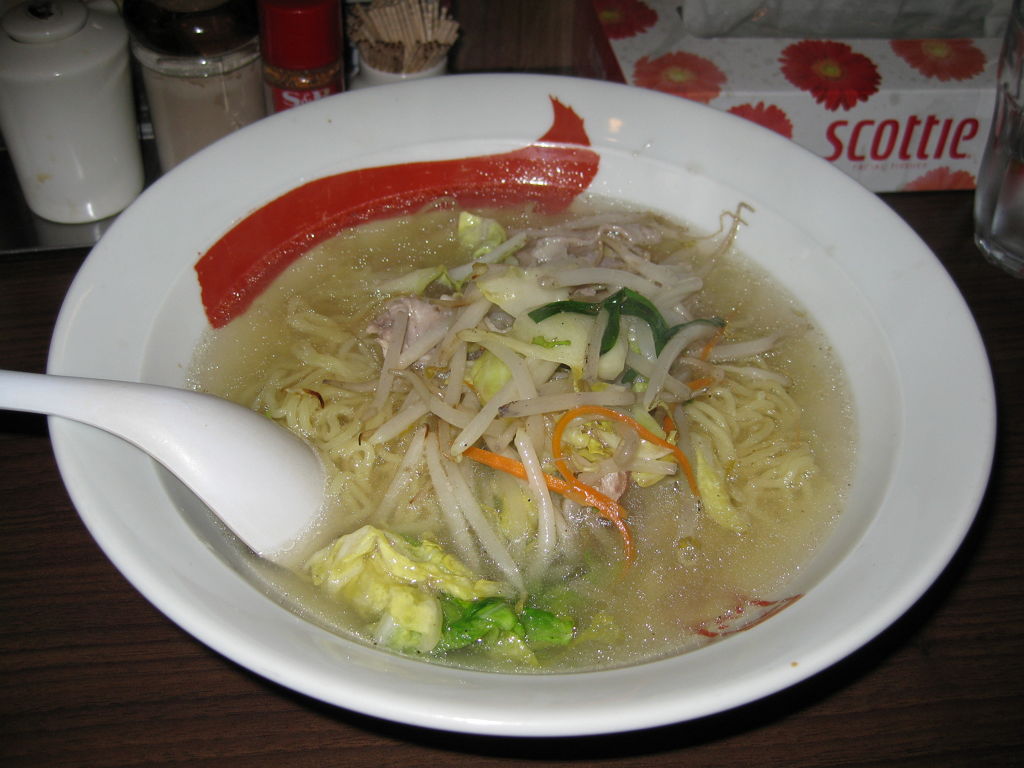
Hello readers, as you may already know, “Drinking in Japan” is a repost of my original travel blog when I lived in Japan from 2003-2006. I am currently in Winnipeg, Canada rewriting and reposting my original blog entries 10 years after they were posted the first time.
In May 2005, I had a bit of blog burnout and stopped posting for a few weeks. To avoid having this blog go quiet for two weeks, I will be writing some new posts based on things that were happening at the time. I hope you enjoy them!
And if not, please enjoy the picture of delicious ramen in this post. Mmmmm, ramen.
May 15, 2005 – The worst
Posted by Barniferous in Friends and coworkers, Teaching English on May 15, 2015
Today I had the worst kids class in my entire time teaching English in Japan. I can’t go into too many details because I am still working there and don’t know who is reading my blog, but if I have to continue teaching this class I will start considering my career options. I need a vacation!
(2015 Update) I don’t remember the exact details, but I am pretty sure that my original post was about a terrible experience covering one of Kasparov’s classes because he was “injured”. The kids were completely out of control and just went nuts for 40 minutes, running, screaming and throwing stuff. To make matters worse, Kasparov was looking through the window from the adjacent Voice classroom and laughing at me.
Kasparov (obviously not his real name) was a dick.
May 14, 2005 – Too much karaoke?
Posted by Barniferous in Karaoke on May 14, 2015
Something strange happened today; something that has never happened in my 19 months in Japan so far. Something I didn’t even think was possible.
I think I did too much karaoke tonight after work.
May 13, 2005 – Around the World in 80 Days
Posted by Barniferous in Life in Japan, Movies on May 13, 2015

It was another typical day of teaching English at Mishima NOVA. After work, I stopped by the local video shop to rent Jackie Chan’s “Around the World in 80 Days”. It was a typical odd couple buddy movie that was not classic Jackie, but there were still some cool stunts.
May 11, 2005 – Return to Fuji city
Posted by Barniferous in Teaching English on May 11, 2015
Today I had another shift at Fuji school. Like every other day of the week, I have a group kids class here as well. Fortunately this class only has 2 students, and they were pretty good.
It’s much easier to keep the interest of 2 kids that don’t really want to study English than 8 kids who don’t really want to study English.
 Drinking in Japan
Recent Comments